How to summarize a YouTube video
· By the SummaryNote team · 12 min read · This is a SummaryNote article.
A useful video summary lets you return to the argument, lesson or demonstration without watching the whole source again. It is shorter than a transcript, but it keeps enough context to explain what the speaker meant. The best format depends on what you intend to do next: revise for an exam, brief a colleague or try a technique yourself.
Start with a manual pass before choosing a tool. Identify the purpose, divide the video into sections and write the main idea of each in your own words. A transcript or generated draft can make that work easier, but neither removes the need to check the source. The steps below work with a notebook or document editor as well as with a summarizing tool.
Before you start: decide what the summary is for
Write a question at the top of your page. A student might ask, “What concepts do I need to explain on the exam?” A colleague might ask, “Which proposal is being made and what evidence supports it?” A creator researching an episode might ask, “What is the central argument and where does the speaker qualify it?” Your question gives you a reason to include one detail and leave another out.
Record the video title, creator, link and date you accessed it. If the video is part of a series, note the relevant episode or section. This source information helps you return to the original when a reader needs more detail. It also separates the speaker’s claims from your interpretation. If you plan to share notes containing someone else’s words, consider permission and the context in which they were shared.
Choose an output that fits the reader. A short paragraph is useful for deciding whether to watch. Section headings and bullets are better for study or reference. A procedure needs ordered actions, prerequisites and cautions. A discussion may need competing viewpoints rather than a single conclusion. You can keep a detailed working note and make a shorter version from it later.
How to summarize a YouTube video manually
Preview the structure
Read the title and description, then look for chapters or other visible signposts. These suggest how the material is organized, but they are not a substitute for watching: a heading may promise something the speaker does not actually cover. Skim the opening and ending to understand the question and the conclusion, then work through the sections in order.
Make a rough outline with a line for each change of topic. Leave space beneath each heading for the main point, supporting evidence and any uncertainty. For a demonstration, also leave room for materials, sequence and the result. If a section runs for a long time, pause at a natural transition rather than trying to remember every detail at once.
Capture ideas, not every sentence
After a section, pause and describe its point without looking at your notes. Then check whether your sentence preserves the speaker’s meaning. Add a supporting detail only if it explains why the point matters or helps the reader use it. Repeated introductions, asides and illustrative anecdotes can often be shortened; a condition or exception may be essential even if it appears only once.
Use quotation marks for a short phrase you intend to reproduce exactly, and keep it separate from your paraphrase. Note where it appears so you can check the wording and surrounding context. When the speaker refers to a chart, slide or object, write down what it shows rather than relying on captions alone. Visual information may carry the point that the spoken words assume you can see.
Build the summary from the outline
Read your section notes and ask how they fit together. Write a lead sentence that states the overall topic and the speaker’s main conclusion. Follow it with the supporting points in a useful order. If the original presents a problem, evidence and recommendation, preserve that relationship. If it offers several options, explain the distinction instead of collapsing them into a single recommendation.
Finish by comparing your summary with the source. Check names, dates, quantities, technical terms and any statement that could change a decision. Revisit the relevant passage when the meaning is unclear. Mark unresolved questions rather than filling gaps with a plausible guess. A concise note that accurately says “the speaker does not specify” is more helpful than an invented answer.
Use a transcript without losing context
Captions and transcripts can help you find a passage and review unfamiliar terminology. Read them as a working record rather than a perfect account. Punctuation, speaker changes and specialized words may be wrong; a sentence can also mean something different when separated from the question that prompted it. Check the video whenever a passage seems inconsistent or a distinction matters.
Do not simply remove every other line of the transcript. First group related passages under headings, then write the point each group makes. Keep the transcript available for evidence while putting your own summary in a separate area. This makes it easier to see which statements are direct source material and which are your synthesis.
If captions are unavailable or incomplete, watch and take notes manually. Pause when necessary and describe important visuals. If accessibility or accuracy is essential, seek an appropriate transcript or assistance rather than assuming an incomplete text captures the whole presentation. A summary is only as reliable as the source material you can actually review.
A worked study scenario
Imagine a student watching a lecture about how a city manages stormwater. Their goal is to explain the main approaches in class, not to reproduce every anecdote. Before watching, they write the question: “How do the approaches reduce runoff, and what trade-offs does the speaker mention?” They save the title and link, then create headings for the problem, proposed approaches and limitations.
During the lecture, the speaker describes surfaces that let water soak in, planted areas that retain it, and the maintenance each approach needs. The student pauses after each topic and writes a sentence about its purpose. When a diagram explains where water flows, they sketch its relationships in words. They flag a quantity in the captions because it does not sound clear and replay that passage before using it.
The finished summary might read: “The lecture compares ways to slow and absorb stormwater before it enters drains. Permeable surfaces and planted areas work in different locations, and both require maintenance to keep functioning. The speaker emphasizes choosing an approach for local conditions rather than treating one design as a universal solution.” Beneath that paragraph, the student adds a question for review: “Why might maintenance affect the choice of design?”
That result is useful because it connects the approaches to the problem and keeps the qualification. It does not claim the imagined lecture proved that a particular design is best everywhere. For an assignment requiring evidence, the student would return to the source, record the relevant details and cite it according to the assignment’s requirements.
A worked research scenario
Imagine a creator researching an interview for a future episode. The goal is to understand the guest’s position, not to treat every statement as an independently verified fact. The creator divides the interview into the problem, the guest’s proposed response and the host’s challenges. Under each heading they distinguish a claim from the reason offered to support it.
In the working note, they write: “The guest argues that a smaller pilot can reveal practical problems before a wider rollout.” They also record that the host asked about costs and that the guest described a limitation. In the short summary, they keep both the proposal and that limitation. Before quoting the guest or repeating a consequential claim, they return to the video and consult the underlying source if one is named.
This approach prevents a common distortion: turning an interviewee’s opinion into an established result. It also makes later work easier. The creator can see which questions remain open, which passages are worth revisiting and which ideas need independent verification. A summary is a map back to evidence, not a replacement for evidence.
Summarize a captioned video with SummaryNote
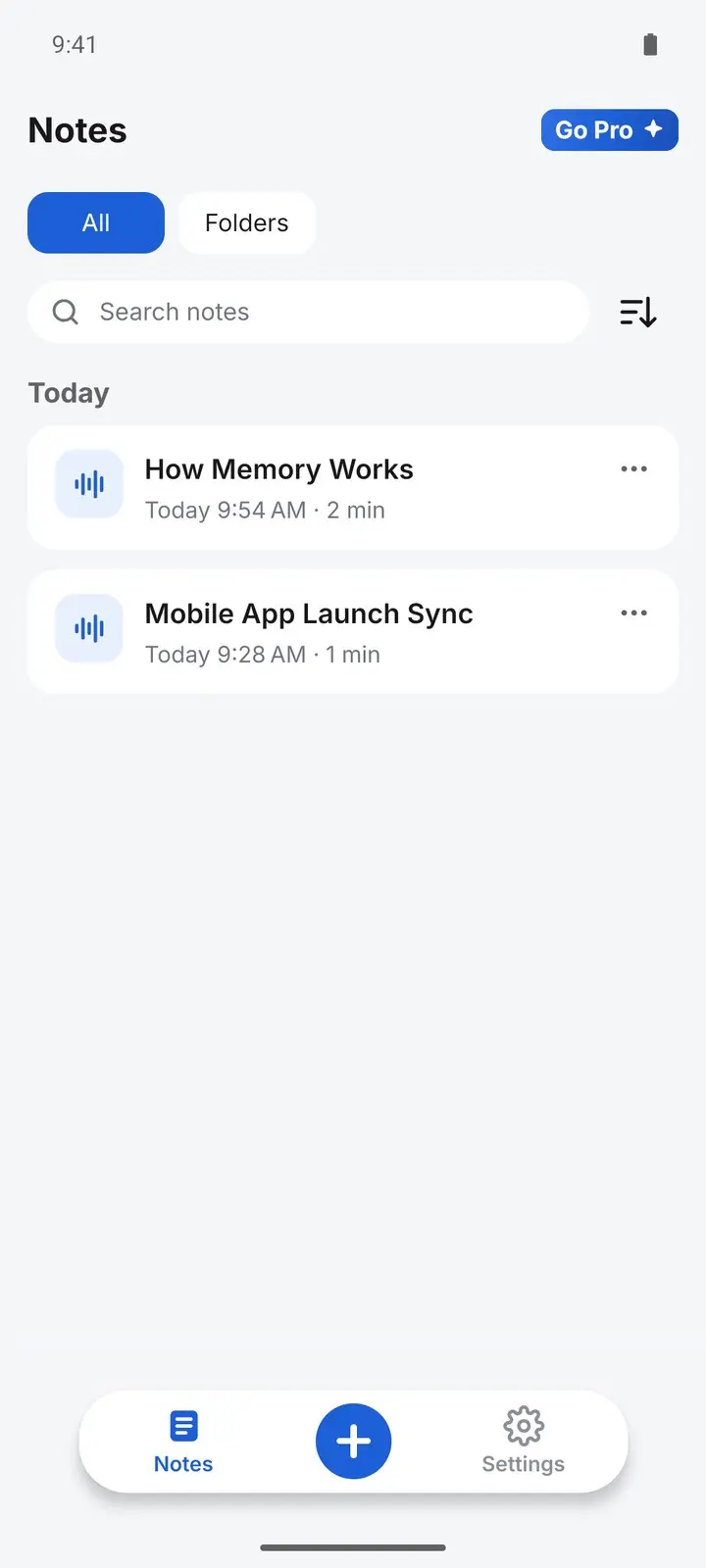
For a captioned YouTube video, SummaryNote can create a draft note from a link in the Android app. Choose the YouTube option, paste the link and follow the prompts. The YouTube video summarizer gives you a starting point; keep the original video available as you review the result.
Read the draft against the transcript and the video. Check whether the main conclusion matches the speaker’s argument, whether qualifications survived, and whether names and technical terms are right. A generated draft may miss visual context or misunderstand speech. Return to the relevant passage whenever a detail is uncertain, especially before sharing the note or acting on it.
Then reshape the note around your original question. Move the most useful point to the top, combine repetition and add a heading wherever the topic changes. For a lecture, the lecture notes template can help you organize the ideas and turn them into review questions. Keep your own questions distinct from claims made in the video.
Checklist before you share or study
- Record the title, creator and link so you can find the source again.
- State the purpose and the main idea in language your reader can understand.
- Include the evidence, steps or qualifications needed to understand each point.
- Check important names, dates, quantities and terminology against the video.
- Review visual material that captions or a transcript may leave out.
- Separate direct quotations, the speaker’s claims and your own interpretation.
- Mark uncertainty and unanswered questions instead of guessing.
- Remove repetition and choose a format that supports the reader’s next action.
For a study note, try answering your own questions without looking at the summary, then return to the source for anything you cannot explain. For a briefing, ask whether a reader can identify the proposal, supporting reasons and unresolved issues. For a procedure, check that the sequence and necessary conditions are clear. Each purpose needs a different final check.
Common mistakes and how to fix them
Keeping too much
A transcript with a few lines removed is still difficult to scan. Fix it by writing one sentence for each major section, then selecting only the details that support the purpose. Keep the longer working note separately if you may need it later. Shortening should remove repetition, not the caveats that make an argument accurate.
Trusting captions or a draft without review
Captions can mishear a name or omit a meaningful pause, and a generated summary can turn an uncertain statement into a confident one. Fix this by checking consequential details in the video and comparing each conclusion with the surrounding passage. If you cannot establish what was said, label the point as uncertain rather than correcting it from memory.
Missing the visual explanation
A speaker may say “this part” while pointing to a diagram, or demonstrate an action without describing every movement. Fix this by watching the relevant section and adding a plain description of the visual relationship or sequence. If the demonstration is important, a text summary may need to direct the reader back to the video for the full context.
Mixing claims with conclusions
Notes become misleading when the reader cannot tell what the speaker said and what you inferred. Fix this with clear attribution: “The speaker suggests…” or “My question is…”. A claim in a video is not automatically verified. For a decision that depends on it, find the supporting evidence and assess that evidence separately.
Writing for no particular reader
A list of disconnected points may be accurate but still hard to use. Fix it by returning to the question you wrote at the start. Put the answer first, group the supporting points and remove material that does not help the reader. If the audience changes, create a different short version from your working notes rather than forcing every detail into one summary.
Choose the right level of detail
A brief overview answers what the video is about and why it matters. A study note adds definitions, connections and questions for recall. A procedural note keeps materials, sequence, conditions and cautions together. A research note records attribution and distinguishes evidence from interpretation. You can use the same source for each, but the details you retain should serve the task.
Finally, revisit your summary after a break. Can you explain its main point without opening the video? Can another reader follow the reasoning without mistaking an opinion for a fact? If not, revise the connection or add the missing context. Keep the link close to the note so the original remains easy to consult.