Biology lecture · How Memory Works
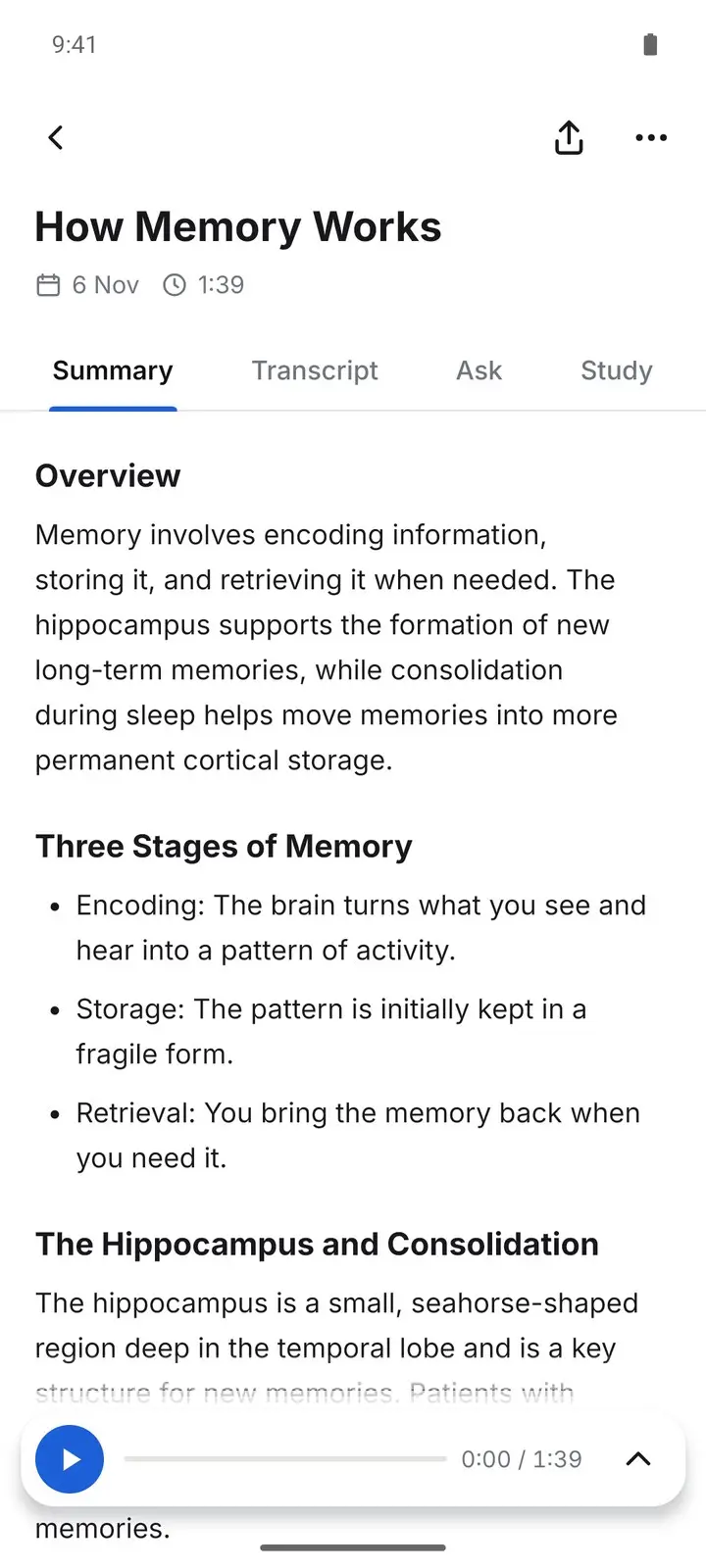
Memory involves encoding, storage and retrieval. The hippocampus helps form long-term memories.
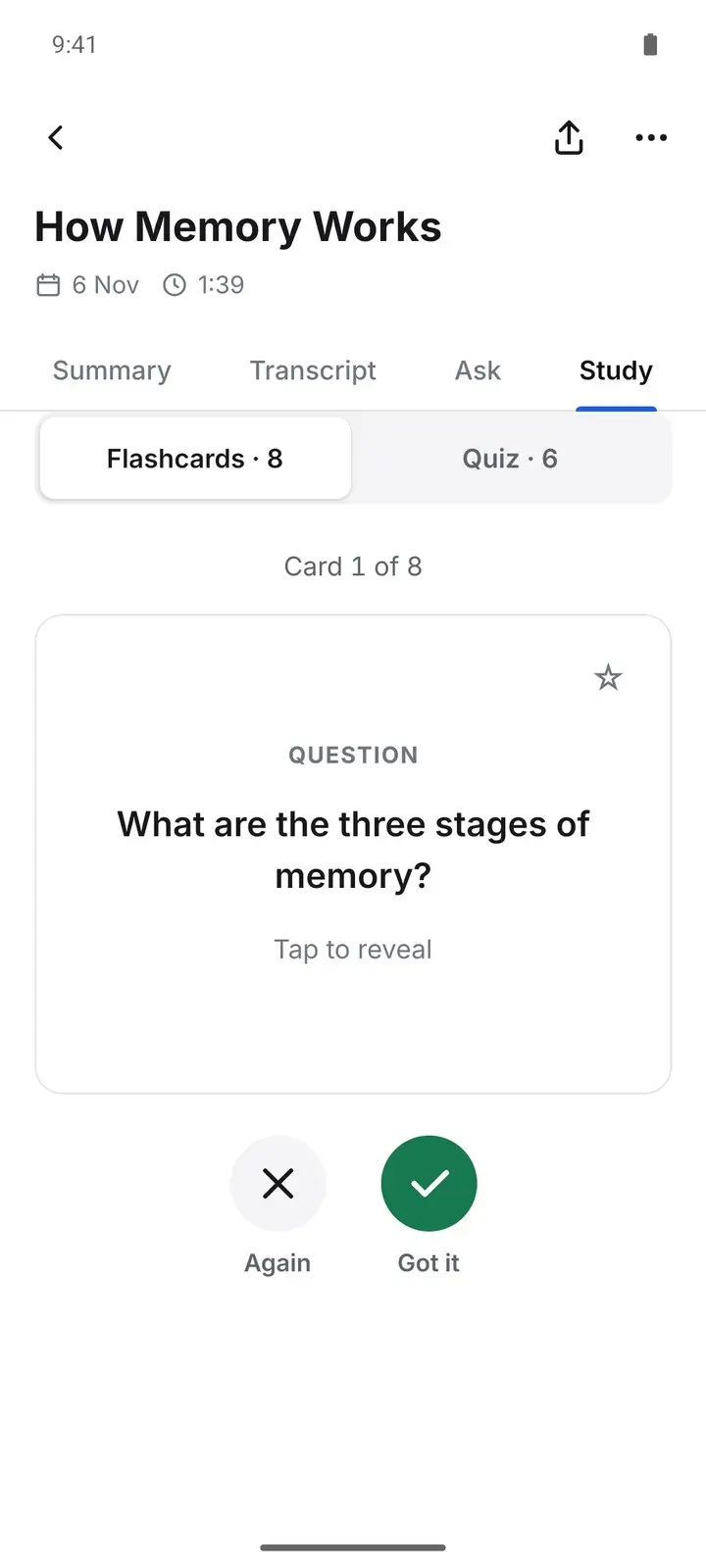
Record a lecture, get structured notes, then study the same material with flashcards and a quiz.
First complete note freeNo card needed

Record in class in the web or Android app.
Return to the recording when you want to check a point.
Already recorded the lecture? Upload the audio instead.
Record a lecture, get structured notes, then study the same material with flashcards and a quiz.

Example product recreation from a single source.
Memory involves encoding, storage and retrieval. The hippocampus helps form long-term memories.
It helps form new long-term memories.
| Source | Formats and limits | Where |
|---|---|---|
| Audio | MP3, M4A, WAV, OGG, AAC, WEBM, 3GP | Web and Android |
| Length and size | 30 seconds minimum; Free up to 3 hours, Pro up to 5 hours; 500 MB maximum | Per file |
| Transcript export | DOCX, TXT, SRT, VTT | Every plan |
Compare meeting and study tools, platforms, exports and more.
Read article →Compare transcription, meetings and study tools across both products.
Read article →Learn the Cornell method, see a filled example and download a template.
Read article →Yes. Record in the web or Android app.
Yes. Upload an audio recording.
A transcript and structured summary, plus flashcards and a quiz.
Free supports up to 3 hours per file; Pro supports up to 5 hours, with a maximum of 500 MB. Files need at least 30 seconds.
See the For students page for more ways to use SummaryNote during your studies.
Start with your first complete note free.
