How to write meeting minutes
· By the SummaryNote team · 11 min read · This is a SummaryNote article.
What meeting minutes are for
Meeting minutes are a working record of decisions, responsibilities and the context needed to understand them. They are not a transcript. A transcript follows what people said; minutes help someone see what the group agreed, what remains open and what needs to happen next. The right level of detail depends on the purpose of the meeting and the people who will use the record.
Before you begin, ask who needs the minutes. A project team may need a short action list and the reasons behind a change. A formal committee may follow an established approval process and require a particular format. Use the organization’s rules when they apply, and ask the meeting owner if you are unsure what belongs in the record.
Start with a manual method
Before the meeting: prepare a useful page
Write the meeting title, date, participants and purpose at the top. Copy the agenda into the page, leaving room under each topic for a decision, its context and any follow-up. Add a separate area for questions that do not get resolved. This structure makes it easier to listen for outcomes instead of trying to record every sentence.
Agree who will take notes and how the group will confirm them. If you intend to record, obtain appropriate permission before recording or sharing. Keep the agenda and any supporting documents close at hand so that names, project terms and proposed changes can be checked as the discussion unfolds.
During the meeting: listen for outcomes
Capture a decision in plain language when the group reaches one. Record the reason if it will help a future reader understand the choice. If people consider an idea without agreeing to it, mark it as a proposal or an open question. Do not turn a suggestion into a commitment simply because it was discussed at length.
For each action, write the person responsible, the outcome expected and any agreed due date. If the owner or date is unclear, leave it open and ask for clarification. Distinguish the person doing the work from people who will be consulted. A useful action says what someone will deliver, not merely the topic they talked about.
After the meeting: edit and confirm
Review your notes while the discussion is fresh. Move decisions and actions to a prominent place, remove repetition and correct names against the agenda or participant list. Where you cannot tell whether a date was agreed, flag it for the owner rather than inventing one. Share the draft with the appropriate participants and incorporate corrections before treating it as the agreed record.
Store the approved version where its intended readers can find it. Follow the team’s usual access and retention practices, particularly when the discussion contains sensitive information. A concise record that people can find and trust is more useful than a long record that nobody reviews.
A worked set of meeting minutes
Imagine a product team discussing a launch. The group agrees to keep the proposed release date, but the design work is unfinished. The discussion also raises a possible change to onboarding, which the group has not yet approved. The minutes might read:
- Purpose: Review launch readiness and identify remaining decisions.
- Decision: Keep the proposed release date, subject to the outstanding design work being completed.
- Reason: Engineering reported that the build is ready for review; the remaining concern is the design material.
- Action: Design lead to finish the material and report its status by the agreed date.
- Open question: Should the onboarding flow be shortened? The team will review the proposal before deciding.
Notice the distinction between an action and an open question. The design lead has a specific deliverable; the onboarding change still needs a decision. If the meeting did not establish a date for the design work, write “date to be confirmed” and follow up. Do not assign a deadline based on what seems reasonable to the note taker.
The same pattern works for a client meeting. Record what the client approved, what the consultant will deliver, the agreed timing and any assumption that could change the work. A reader who missed the meeting should be able to tell which items are commitments and which are still being explored.
Choose the right level of detail
Minutes should let an absent reader understand the outcome without having to reconstruct the whole conversation. Start with the purpose of the meeting and the topics actually discussed. Under each topic, record the outcome and enough background to explain it. Include a disagreement when it changes the meaning of the decision or when your organization requires it; otherwise, avoid attributing every opinion to a named person.
For a routine project update, a compact list of decisions and actions may be enough. For a committee, check whether the governing documents require attendance, motions, votes, declarations of interest or formal approval. Do not assume a project template satisfies those requirements. Ask the chair or secretary which details are required and how corrections should be recorded.
Keep supporting material separate when it would make the minutes hard to scan. Refer to the relevant proposal or agenda item by a clear title, and make sure intended readers can access it. The minutes should still state the decision itself: a link to a presentation alone does not tell a reader what the group agreed to do.
Turn rough notes into a clear record
Separate discussion from decisions
During a discussion, write short phrases under the agenda topic. When the group reaches a conclusion, restate it to the chair or participants if appropriate: “Have we agreed to proceed with the revised scope?” Capture the answer and any conditions. This small check prevents a tentative direction from becoming an apparently final decision in the draft.
Use a direct sentence in the finished minutes, such as “The team agreed to review the revised scope before approving the launch.” If approval depends on a later review, say so. If the group deferred the matter, record who will bring it back and what information is needed. A deferred decision is useful information, not a gap to fill with a guess.
Write actions that can be followed
An action has a responsible person and an observable result. “Review budget” leaves the reader wondering what happens next; “The project lead will review the revised budget and send a recommendation to the team” makes the expected outcome clearer. Add a due date only when participants agreed to one. If several people contribute, identify the person accountable for following through and mention collaborators where useful.
When no one accepts an action, record it as unassigned and ask the meeting owner to resolve it. When a date depends on another event, describe that dependency. At the next meeting, use the action list to check what is complete, what has changed and which items need a new decision. Update the follow-up record without silently rewriting the original agreement.
Make the draft easy to verify
Write in neutral language and describe the substance rather than judging participants. Replace vague references such as “this” or “the change” with the name of the proposal. Check that the same project, person and deliverable are named consistently throughout. Spell out an unfamiliar abbreviation when readers may not share the same context.
Send the draft to the people who can verify it, using the review process agreed by the group. Point out unresolved names, dates and decisions so reviewers know where a response is needed. Record corrections through the normal process, and label the version clearly as draft or approved. For a formal body, follow its rules for amending and approving minutes rather than treating silence as approval.
Another worked scenario: a client project
A consultant meets a client to discuss a proposed report. The client likes the direction but wants to see the revised outline before approving the full scope. The consultant offers to revise it; the participants agree on a delivery date. A possible new section is discussed, but no one decides whether it belongs in the project.
- Decision: The client will review a revised outline before approving the report scope.
- Action: The consultant will send the revised outline by the agreed date.
- Open question: Whether to add the proposed section remains for the scope review.
- Next step: The client will respond to the outline through the agreed review process.
This record does not say that the client approved the full report or that the additional section is included. It captures the agreed work and leaves the unresolved scope visible. If the client did not promise a response date, the minutes should not supply one. A short follow-up asking for clarification is better than turning an assumption into a commitment.
Adapt the format to the meeting
Recurring team meetings
Keep a consistent agenda so readers can compare progress between meetings. Begin with outstanding actions, then record new decisions and issues. For each unfinished item, distinguish a status update from a change in ownership or timing. Link to the previous record when useful, but make new decisions understandable on their own.
Planning and decision meetings
Record the options considered only as far as they explain the outcome. State the chosen direction, the reason that matters to the group and any conditions or dependencies. If the decision is reversible or scheduled for review, include the agreed review point. This helps a future reader understand when to revisit it without presenting every suggestion as an approved plan.
Meetings with sensitive topics
Agree who needs access before distributing the draft. Include the information necessary for the meeting’s purpose and avoid unnecessary personal detail. If a topic needs a restricted record, follow the organization’s established process for where it belongs and who can review it. A general meeting summary should not become a substitute for a required confidential record.
A practical checklist
- Identify the audience, purpose and format before the meeting.
- Prepare the agenda, participant list and a place for decisions, actions and open questions.
- Record each decision in a sentence that can stand on its own.
- Give every action an owner, a deliverable and an agreed date, or flag what is missing.
- Check names, dates, quantities and the meaning of any ambiguous statement.
- Ask the right participants to correct the draft and keep the agreed version accessible to its intended readers.
Common mistakes and how to fix them
Writing a transcript instead of minutes
A chronological account can hide the result beneath the discussion. Pull decisions and actions to the top and keep only context that explains them. Keep a separate detailed record if the team needs one; the minutes should still make the outcome easy to locate.
Leaving actions without owners
“The team will review the proposal” does not tell anyone who is responsible for moving it forward. Ask for an owner and write the expected result. If the group has not chosen one, mark the action as unassigned and raise it with the meeting owner.
Treating a proposal as a decision
“We could change the schedule” and “we agreed to change the schedule” have different consequences. Use separate headings for decisions and open questions. If the wording in your notes is ambiguous, check with participants before distributing the record.
Guessing a date or a name
Small errors can send work to the wrong person or create a false deadline. Compare the draft with the agenda and any source recording you have permission to use. Mark uncertainty clearly and ask the responsible person to confirm it.
Sharing without a review
A draft may omit a qualification or misrepresent the reason for a choice. Give participants a way to point out corrections, then distinguish the agreed record from earlier drafts. Limit access to the people who need the information.
Using a recording or an AI draft
A recording can help you check wording and context after a meeting, provided participants have given appropriate permission. It does not remove the need to decide what belongs in the minutes. Listen again when a statement is unclear, particularly for names, dates, numbers and action owners.
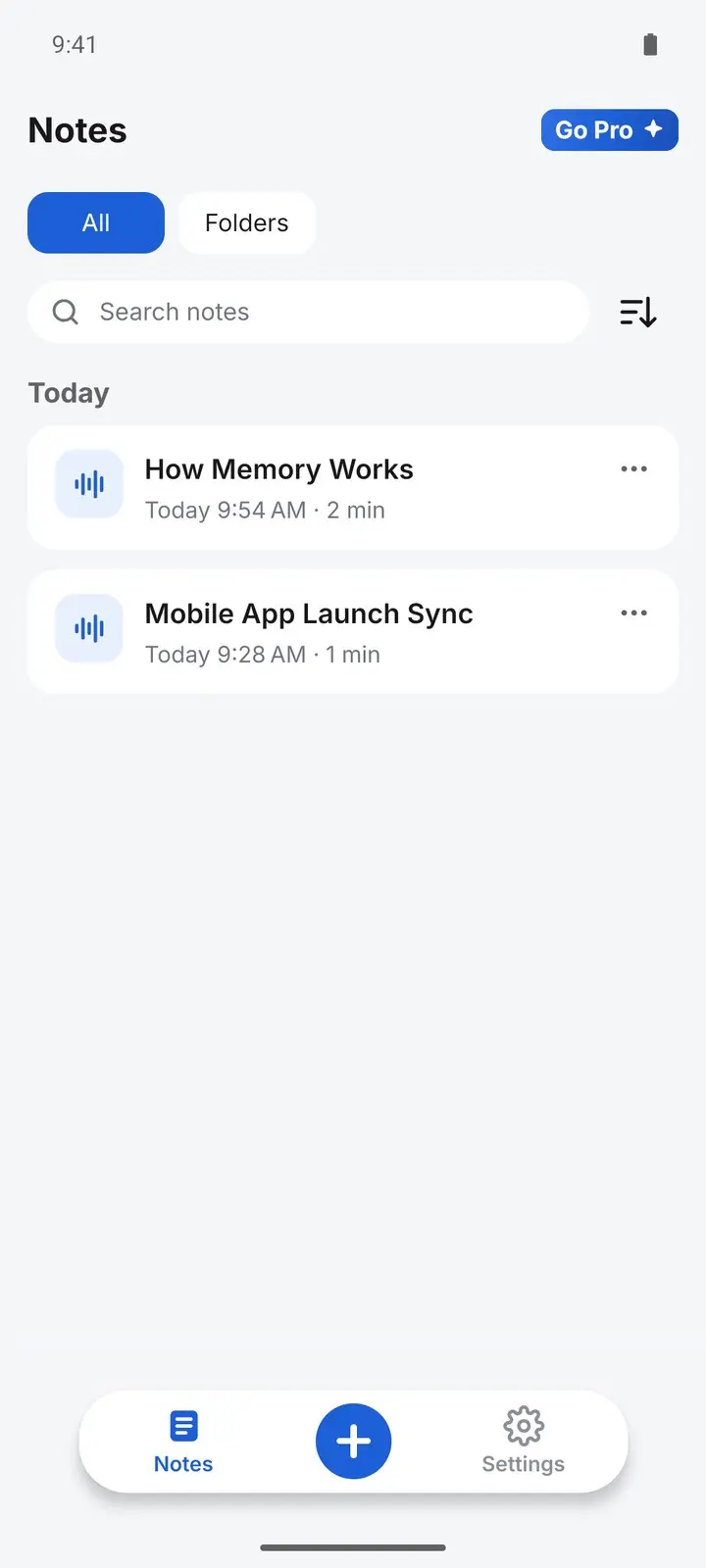
SummaryNote can turn an audio recording into a note on the web or Android. Its Pro meeting notetaker is available in the Android app for Google Meet and Microsoft Teams. Use the generated material as a draft, compare consequential details with the source, and confirm outstanding decisions with participants. The meeting minutes template provides a structure for the final record, while AI meeting notes explains the product workflow.
Before distributing any AI-assisted draft, check that each action is supported by the discussion and that proposed ideas are not presented as settled decisions. Remove material the audience does not need, preserve relevant qualifications and follow your organization’s process for approval and sharing.