Transcript with context
Read voice memos as text and return to the audio when a passage needs another listen. The transcript gives you a practical starting point for review, rather than requiring you to type the entire recording yourself.
Turn a voice memo into a searchable transcript and a note you can come back to when it is time to act.
Use the tool above to record a voice memo or upload one you already saved. Choose the audio language or leave it on automatic detection, then choose the language for the summary. The source remains in this browser while you prepare to sign in.
Sign in with your account and check the details on the dashboard. Choose Make a note when you are ready to upload. This confirmation lets you see which account will receive the note before processing begins.
Open the finished note and read the transcript alongside the source. Check names and important wording against the recording, then use the summary, study tools or exports for the next part of your work.
Choose a source that fits your workflow and check its length before you begin.
| Option | Details |
|---|---|
| Audio formats | MP3, M4A, WAV, OGG, AAC, WEBM and 3GP |
| Length | 30 seconds minimum; Free up to 3 hours; Pro up to 5 hours |
| Size | Up to 500 MB per file |
| Languages | Audio language with auto-detect; 12 summary languages |
| Exports | TXT, DOCX, SRT and VTT for transcripts |
Record a voice memo or upload one you already saved using a quiet source when possible. Clear speech makes the result easier to review. The browser may be unable to read a file’s duration in advance; the server checks the final limits when the note is made.
Read voice memos as text and return to the audio when a passage needs another listen. The transcript gives you a practical starting point for review, rather than requiring you to type the entire recording yourself.
Speaker labels and timestamps help you navigate a longer recording. Use them to find the relevant passage, then verify the words and the speaker against the original audio before quoting or sharing it.
The same note includes a summary, so you can find the main ideas before reading the full transcript. Compare the summary with the source when a detail matters to your work or your audience.
Use Ask to explore a question about the note and locate useful information. Treat an answer as a guide to the source, and check the transcript or recording before relying on a precise detail.
Study from the material using flashcards and a quiz in the note. These tools can turn a spoken explanation into prompts for review, while keeping the original transcript available for context.
Download transcript text as TXT, DOCX, SRT or VTT on every plan. Choose a document for editing, plain text for a simple handoff, or a timed format when preparing subtitles.
Choose an audio language or let the tool detect it, and select a summary language from 12 options. Review specialist terms and names carefully, especially when the source has background noise or mixed languages.
The completed note belongs to your signed-in account, so you can return to it as your work develops. Your file stays in the browser until you sign in and explicitly choose Make a note.
The meeting notetaker can join Google Meet from the Android app with Pro. For an existing audio recording, use the web widget above and confirm the upload on your dashboard. Review the resulting note and its transcript at your own pace.
Explore Google MeetOn Android with Pro, the meeting notetaker can join a Microsoft Teams meeting. If you already have an audio recording, choose it on the web instead. Review decisions in the summary and check the source when wording matters.
Explore Microsoft TeamsIn the Android app, send your notes to Notion using the integration described on our integration page. A transcript and summary can give your workspace useful context; review the note first so that the details you keep are relevant to your project.
Explore NotionSpeak through a new idea before the details disappear. Later, use the transcript to recover your exact train of thought and the summary to decide which part deserves further work.
Start with a source you have permission to use, then review the text alongside the audio. The finished note gives you a place to keep the transcript and summary together while you decide what to share or study.
Describe what needs attention in a spoken note. Review the result when you are back at your desk, then move the useful actions into your own planning system.
Start with a source you have permission to use, then review the text alongside the audio. The finished note gives you a place to keep the transcript and summary together while you decide what to share or study.
Record observations while working away from a keyboard. A written version makes it easier to revisit details later, but check unfamiliar names and terminology against your original memo.
Start with a source you have permission to use, then review the text alongside the audio. The finished note gives you a place to keep the transcript and summary together while you decide what to share or study.
Make a private spoken reflection after a class or project session. Return to the note when you are ready to connect the ideas with your existing materials and study the parts that matter.
Start with a source you have permission to use, then review the text alongside the audio. The finished note gives you a place to keep the transcript and summary together while you decide what to share or study.
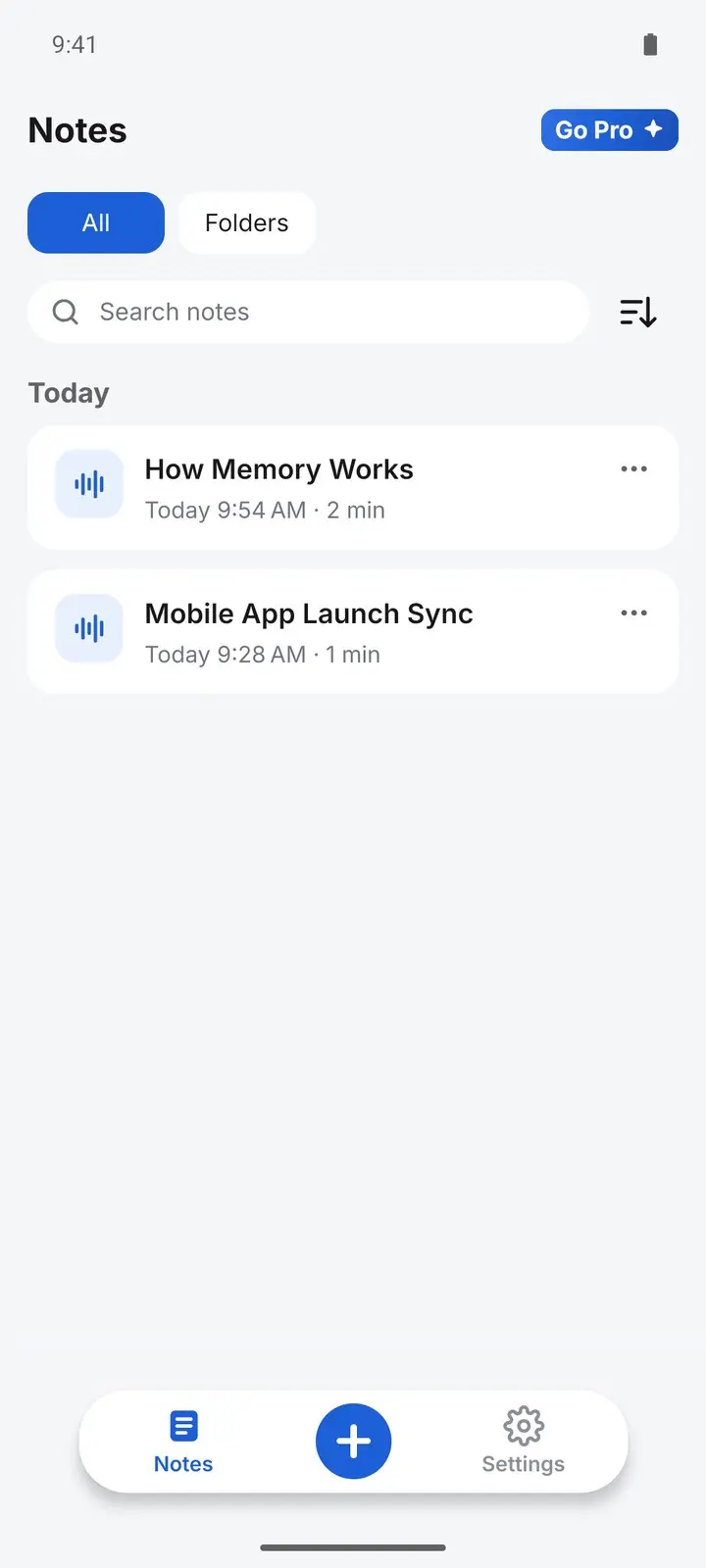
voice memos can begin as a quick task and become a useful reference. After the file is processed, open the note to move between the transcript and summary. Listen again when you need context, and use timestamps to find a passage without reading everything from the beginning.
When you want to learn from the material, try the flashcards and quiz. Ask a question to explore a topic, or export the transcript for a document or subtitles. Review names, technical terms and quotations against the source before you publish or rely on them. Your first complete note includes these tools, so you can decide which parts fit your work.
The web widget is a starting point, not an anonymous converter: sign in, check the account shown on the dashboard and choose Make a note. The Android app also offers other sources, including video and captioned YouTube links. Pick the source that matches the material you actually have.
Transcribe recordings and review the result.
Interview transcriptionFind passages in an interview.
AI meeting notesReview decisions from a meeting.
AI lecture notesRevisit a class recording.
YouTube video summarizerMake notes from captioned videos on Android.
Video to textTranscribe video files on Android.
PDF summarizerTurn a document into a study note.
AI flashcard makerStudy your material with flashcards.
Manual and automatic ways to turn a recording into text, with checks for accuracy.
Read article →Compare transcription, meetings and study tools across both products.
Read article →Five Otter alternatives compared by platform, free plan, meeting bot and uploads.
Read article →Turn a voice memo into a searchable transcript and a note you can come back to when it is time to act. Record a voice memo or upload one you already saved, sign in and confirm on the dashboard. The result is a note containing a transcript and a summary, with tools for review and study.
Yes. Your first complete note is free and does not require a card. It includes the transcript, summary and available exports. After the free note, Pro is available as a weekly or annual subscription through Google Play.
No. The selected file or recording stays in this browser while you sign in. The dashboard shows the account and asks you to choose Make a note before uploading. You can discard the pending item instead.
The web accepts MP3, M4A, WAV, OGG, AAC, WEBM and 3GP audio. You can also record in a supported browser. Video files and YouTube links use the Android app rather than this web widget.
Audio must be at least 30 seconds long. Free supports up to 3 hours per file and Pro up to 5 hours. The maximum file size is 500 MB. The server makes the final eligibility decision.
Review the transcript in the note and check important wording against the audio. Export the transcript as TXT, DOCX, SRT or VTT. You can also use the summary and study material that come with the same note.
The web tool records first and transcribes after you sign in and confirm. Live text is a Pro feature in the Android app. The web recording does not display a live transcript while you speak.
If this browser cannot keep the pending file, sign in and choose the audio again in the web app. Nothing is partially uploaded by the tool page. You can also return to the dashboard to start a new note.
Make your first complete note free, then review the transcript and summary together.